
Every week, drivers stop by Blue Rose Auto Repair asking about Oregon window tinting laws. Some just bought a car with tinted windows and want to check if it’s legal. Others are thinking about tinting their windows but aren’t sure how dark they can go. It’s a common question—and a smart one—since Oregon is pretty specific about what’s allowed.
Let’s go through what’s legal, what isn’t, and how to stay compliant, just like we’d explain it in our shop.
Why Window Tinting Rules Exist in Oregon
Window tinting isn’t just about looks—it’s about safety. The state regulates tint darkness and reflection levels to make sure drivers can see clearly, especially at night, and that law enforcement can see inside vehicles during traffic stops.
If you’re planning to get your windows tinted or are driving a car that already has tint, it’s best to understand the current Oregon window tinting laws before you find yourself facing a ticket.
Oregon Window Tinting Laws for Cars
The rules are based on Visible Light Transmission (VLT), which measures how much light passes through your windows. The lower the percentage, the darker the tint.
Here’s how it breaks down:
- Front side windows (every vehicle): Must allow at least 35% of light through — 35% VLT is the minimum.
- Back side & rear windows — passenger cars: Must also meet the 35% VLT minimum.
- Back side & rear windows — SUVs, vans & pickups: Can be any darkness, as long as the vehicle has dual side mirrors (Oregon calls these “multipurpose passenger vehicles”).
- Windshield (every vehicle): Non-reflective tint only, along the top six inches (the “AS-1 line”).
- Reflectivity: No tint may be more than 13% reflective, and mirrored, red, gold, amber, or black films are not allowed on any window.
These limits come straight from Oregon’s window-tint statute, ORS 815.221, and police use calibrated tint meters to measure compliance during stops.
If your tint doesn’t meet these numbers, you could be required to remove it and pay a fine.
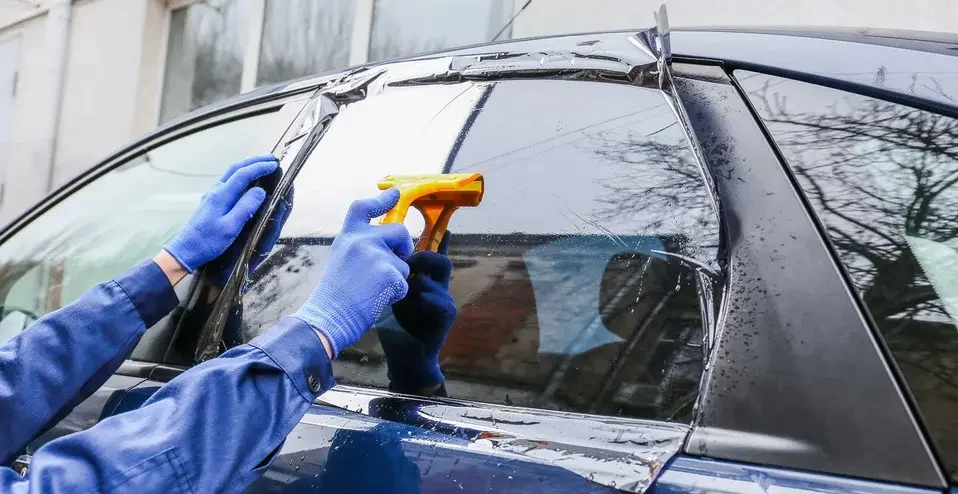
What’s the Darkest Legal Tint in Oregon
A lot of people ask about the darkest legal tint in Oregon. The short answer: 35% for the front windows.
That means your tint must let in at least 35% of light—dark enough to reduce glare, but still clear enough for visibility and safety.
The back side and rear windows depend on your vehicle type. On a passenger car, they must also meet the 35% limit. On an SUV, van, or pickup with dual side mirrors, there’s no darkness limit on the windows behind the driver — so you can go as dark as you like back there.
Our car window tinting team — here in Springfield and across Eugene — always makes sure your tint stays within state limits, so you can enjoy privacy and comfort without risking a fine. See our window tinting in Springfield, OR page for details.
Is 20 Percent Tint Legal in Oregon?
This question comes up all the time. Is 20% tint legal in Oregon? It depends on the window and the type of vehicle.
Front side windows: No — 20% is too dark. Oregon requires at least 35% VLT on the front side windows of every vehicle.
Back side & rear windows: 20% is only legal on an SUV, van, or pickup (“multipurpose passenger vehicle”) that has dual side mirrors, because those windows have no VLT minimum. On a standard passenger car, the back and rear windows must still meet the 35% minimum — so 20% is not legal there.
The one exception is a medical exemption: with a signed letter from a physician or optometrist, Oregon allows darker tint for drivers with qualifying conditions. If you want a darker look, bring your vehicle in — we’ll measure it, tell you exactly what’s legal for your specific car, and install film that keeps you compliant.
Is 5 Tint Legal in Oregon?
No—it’s not. 5 tint (which allows only 5% of light through) is extremely dark, and it’s illegal on all windows for passenger cars in Oregon.
You might see it on limousines or certain commercial vehicles, but those follow separate regulations.
We often remove illegal tint for customers who recently bought used cars. If your car has 5% tint, it’s worth bringing it in. We’ll test it, explain what needs changing, and apply the proper legal film.
Oregon Tint Laws 2026: What’s Changed?
For 2026, the Oregon tint laws remain the same as in recent years. The state still requires a minimum of 35% VLT on front windows and limits reflective tints that can create glare.
Some minor clarifications were added, including clearer wording about rearview mirrors and the use of manufacturer certification labels for tint films. When we install new tint, we include the proper label inside the door jamb to verify it meets Oregon standards.
So, if you’ve heard about “new Oregon tint laws 2026,” the basics haven’t changed — but the state continues to monitor compliance closely.
Why Legal Tinting Matters
A lot of people underestimate how much trouble illegal tint can cause.
Here’s what can happen:
- Tickets and fines: An illegal-tint citation is a Class B traffic violation in Oregon — the presumptive fine is about $135, and with court costs it typically runs $135–$360 depending on the county. It’s usually written as a fix-it ticket.
- Inspection failures: Too-dark tint can prevent you from passing inspections or registration renewals.
- Safety issues: At night or during bad weather, dark tint reduces visibility, which increases the risk of accidents.
That’s why it’s smart to work with professionals who understand and follow the law. Our installers at Blue Rose Auto Repair know the Oregon codes inside and out.
What’s the Difference Between Factory Tint and Aftermarket Tint
This is another point of confusion we often explain in our auto detailing department.
Factory tint is built into the glass itself and usually only applies to rear windows. It’s lighter and doesn’t provide UV rejection like aftermarket films.
Aftermarket tint is a film applied to the inside of your windows. It offers UV protection, privacy, and heat control—but it must meet Oregon’s legal limits.
If you’re unsure what kind you have, we can check it with our tint meter and let you know if it’s compliant with Oregon window tinting laws.
What Happens If You’re Caught With Illegal Tint?
If you get pulled over for illegal tint, you’ll likely get a fix-it ticket. That means you’ll need to remove or replace the film and provide proof it’s legal afterward.
Some drivers risk leaving it on, but that usually leads to higher fines later. It’s cheaper and safer to have it tested and corrected right away.
We regularly help customers around Auto Protection & Repair Services in Eugene, Oregon and Auto Protection & Repair Services in Thurston Springfield, Oregon handle these adjustments quickly.
How We Keep Tint Jobs Legal and Safe
When we install tint, we check:
- Light transmission levels: Our meters confirm the tint meets Oregon’s 35% rule.
- Proper reflection: Oregon limits how reflective a tint can be to avoid glare.
- Film quality: We use trusted brands that include UV protection and don’t bubble or peel.
If a customer comes from Auto Protection & Repair Services in Hayden Bridge, Oregon or Auto Protection & Repair Services in Goshen, Oregon, we offer the same process—precise measurement, legal compliance, and professional finish.
See Also:
- Major Car Repair Costs Explained by a Local Mechanic
- How Often to Start Your Car to Avoid Issues: Complete Educational Guide
- How Often Should You Replace Your Car Battery: Complete Educational Guide
- Signs That Your Battery Has to Be Replaced Before You Get Stranded
- Wheel Alignment vs Front End Alignment Explained for Oregon Roads

Is perforated tint treated differently at all?
Yes, perf is treated differently