
Rodents eating car wires can catch anyone by surprise. A vehicle can run fine one day, then act up the next. Many drivers in Eugene, Springfield, and nearby areas deal with this more often than they expect. A warm engine bay feels like a safe shelter to small animals. Once inside, they chew wires, hoses, and insulation without a second thought. That can lead to rough running, strange odors, warning lights, and even a vehicle that will not start.
This is something Blue Rose Auto Repair sees regularly. The goal here is to explain the problem the same way a technician would explain it in person. Clear, simple, and direct. No pressure. No confusing terms. Just real talk about what happens, why it happens, and what can be done about it.
Why Rodents Get Into Cars
Rodents look for warm, protected spaces. An engine that was recently used stays warm for some time. That warmth pulls rodents in, and tight corners feel safe. Modern wiring sometimes has soy-based coatings. Some rodents chew through it like food. It is not on purpose. It just happens.
Signs of rodent activity include:
- Odd smells under the hood. Heat mixed with droppings or nesting material can create a strong odor that does not fade by itself.
- Droppings or small bits of debris. Some drivers discover specks that look like rat poop in the car engine areas after lifting the hood.
- Shredded insulation or leaves. A rat’s nest in car spaces may be tucked behind air ducts, under covers, or near engine supports.
- Engine running rough or stalling. One chewed wire can interrupt an important signal.
Once it starts, it can continue if the rodent keeps returning. In some cases, it turns into rodents inside car engine spaces daily or even rats living in car engine areas for longer periods.
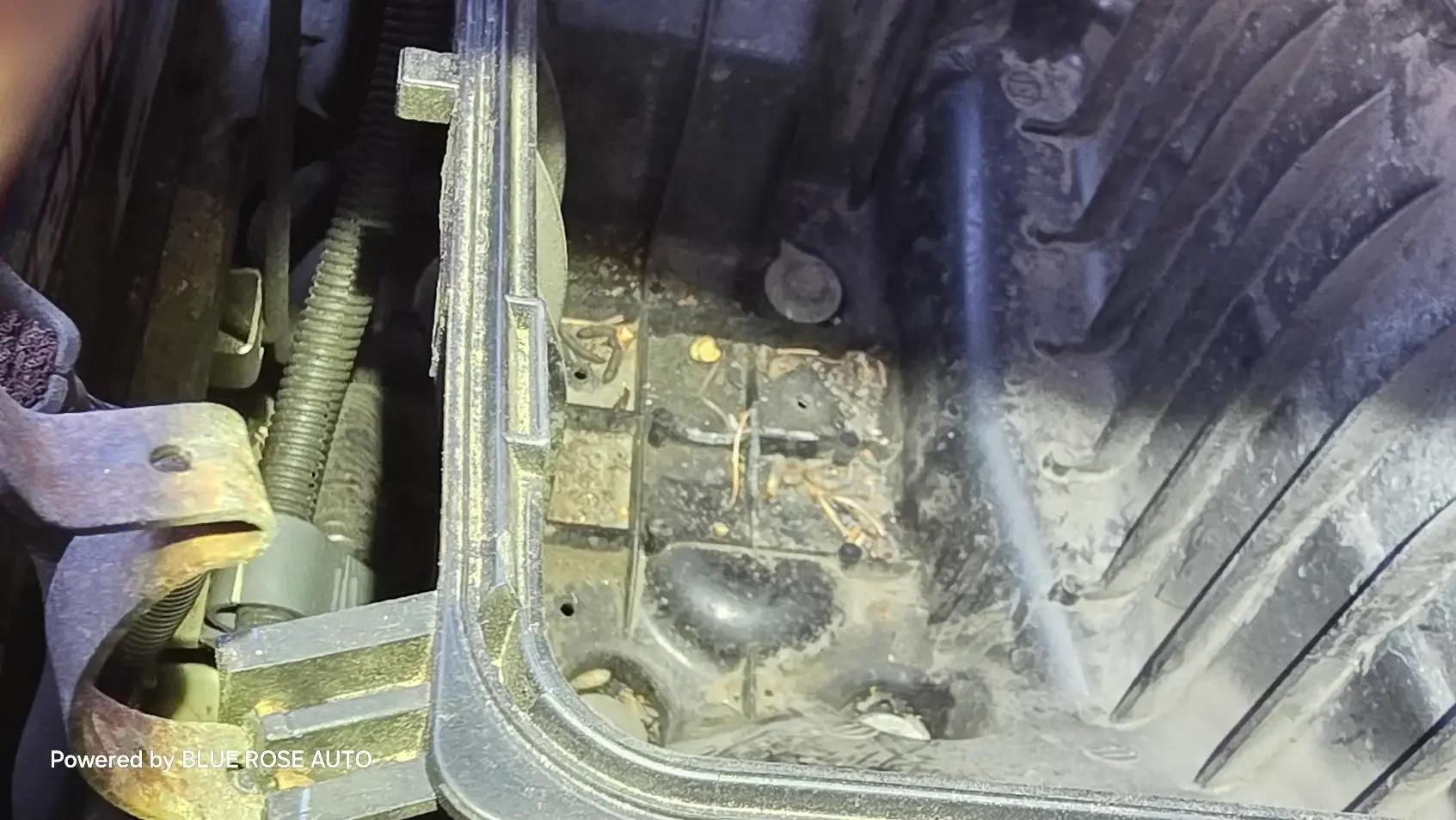
Rat poop are visible
How Much Damage Can Rodents Eating Car Wires Cause?
Damage can range from light to severe. One small wire break can make the engine idle rough. A larger wiring bundle chewed through can stop the engine from running at all. Some wires control the ignition. Some wires help sensors read fuel levels, airflow, temperature, timing, and more.
Common trouble spots include:
- Wires for engine sensors
When sensors cannot send the right signals, the engine may misfire or stall. - Charging system wiring
If this wiring is damaged, the battery may drain or fail to charge. Some vehicles that come in for rodent damage also need battery replacement and charging service afterward. - Cabin air filters and insulation
Rodents often tear up soft material to make nests. The smell may travel into the cabin. After repairs, some drivers request auto detailing to help refresh the interior. - Safety sensors
These may be affected if wiring in those paths is damaged.
In short, a small rodent can interrupt a system that the entire vehicle depends on.
Does Insurance Cover Rodents Eating Car Wires?
Coverage depends on the insurance plan.
If the vehicle has comprehensive coverage, rodent damage may be covered. Comprehensive coverage usually handles damage that is not from a collision. This includes damage from animals. The vehicle owner still pays the deductible, and insurance may cover the rest.
If the vehicle has liability-only coverage, the repair cost is usually not covered. Liability-only protects others if the driver causes damage. It does not help with rodent damage to the driver’s own vehicle.
The choice to file a claim depends on:
- The repair cost
- The deductible amount
- How far the damage spreads
Blue Rose Auto Repair can inspect the vehicle and provide a clear repair estimate. That helps the owner decide whether filing a claim makes sense.
Rodents Eating Car Wires: How Blue Rose Auto Repair Handles It
Our shop explains every step simply and clearly. No guesswork. No confusion.
Step 1: Inspection
We look around wiring routes, hoses, engine covers, and hard-to-see corners. Rodents move around, so one damaged spot can lead to another.
Step 2: System Testing
Testing helps confirm how the damage affects engine operation. It shows whether it is one break or a chain reaction.
Step 3: Repair or Replace
If the damage is small, repairing a wire section may be enough. If the damage is large, replacing a section of harness may be safer for long-term reliability.
Step 4: Cleaning
We remove nesting material and droppings to reduce odor and discourage rodents from returning.
Step 5: Prevention Tips
This may involve small adjustments in parking habits, scents that rodents dislike, or barriers that help discourage return visits.
How Long Can Repairs Take?
Repair time depends on how far the rodent traveled through the wiring. Some repairs take only a few hours. Some require more time if multiple wires are involved. Before starting repair work, we provide a clear explanation and timing so nothing feels unclear.
Places We Serve and Related Services
Rodent damage sometimes overlaps with other needs. For example:
- collision repair
Used if structural panels or bodywork need repair at the same time. - commercial wraps
Useful for business vehicles that require branding after repairs. - car window tinting
Helpful for vehicles that sit outside for long periods.
We support many communities such as:
- Auto Protection & Repair Services in Eugene, Oregon
- Auto Protection & Repair Services in Hayden Bridge, Oregon
- Auto Protection & Repair Services in Thurston Springfield, Oregon
- Auto Protection & Repair Services in Goshen, Oregon
FAQ
Q: Can rodent damage happen overnight?
A: Yes. One night of chewing can stop the car from starting.
Q: Do rodents return after finding a warm engine bay?
A: Many do. Warmth draws them back.
Q: Can small damage spread into bigger problems?
A: Yes. One damaged wire can lead to misfires or safety issues.
Q: Do droppings need special cleaning?
A: Many drivers prefer professional cleaning to avoid contamination.
Q: Can rodents chew hoses as well as wires?
A: Yes. Soft hoses can get torn apart too.
Q: Will insurance rates change?
A: Rate changes depend on the insurance provider.
Q: Can rodent damage trigger warning lights?
A: Yes. A damaged sensor wire can trigger the check engine light.
Q: Can rodents enter through the cabin air intake?
A: Yes. That is common when building nests near filters.
Q: Should traps be placed under the hood?
A: Traps under the hood may cause other problems. Other deterrent methods are usually safer.
Q: How soon should rodent damage be checked?
A: Sooner is better, before damage spreads.
Call Blue Rose Auto Repair for Help
Rodents eating car wires can cause real stress, but repairs are possible. Insurance may help, depending on coverage. Blue Rose Auto Repair works with drivers across Eugene, Springfield, and nearby communities to inspect the vehicle, explain repair steps clearly, and get everything back in working shape.
Call (541) 641-8877 or contact us here:
We’re ready to help you get back on the road with confidence.
See Also:
- How a Mobile Mechanic Can Get You Back on the Road Fast in Oregon
- How Ceramic Coating Protects Your Car
- How to Know What to Expect From Collision Repair Near Me in Eugene and Springfield
- How to Understand Brake Pad Replacement Cost and What Affects It
- How to Tell When Your Car Needs a Brake Repair Near Me
0 Comments