RV roof paint often becomes a topic after leaks, stains, or peeling material show up overhead. Around Eugene, Springfield, and nearby areas like Cottage Grove, Junction City, and Veneta, RV roofs deal with constant moisture, tree debris, and shifting temperatures. Over time, that exposure wears down even well-built roofs.
From the shop’s point of view, the roof protects everything underneath it. Once water finds a way in, damage spreads fast. Insulation, ceiling panels, wiring, and framing all sit at risk. That’s why RV roof paint isn’t just about looks. It plays a major role in sealing, protecting, and extending roof life.
RV roof coatings come in a few types, and the right one depends on the roof material, its condition and how much work you want to take on yourself.
What RV Roof Paint Actually Does
RV roof paint creates a protective coating over the roof surface. That coating seals small cracks, blocks moisture, reflects sunlight, and slows down aging caused by weather.
Unlike standard exterior paint, roof coatings flex. RV roofs move while driving and during temperature changes. A proper coating stretches with that movement instead of cracking.
In Oregon, rain and damp air push moisture into tiny seams. RV roof paint fills those gaps before leaks start.
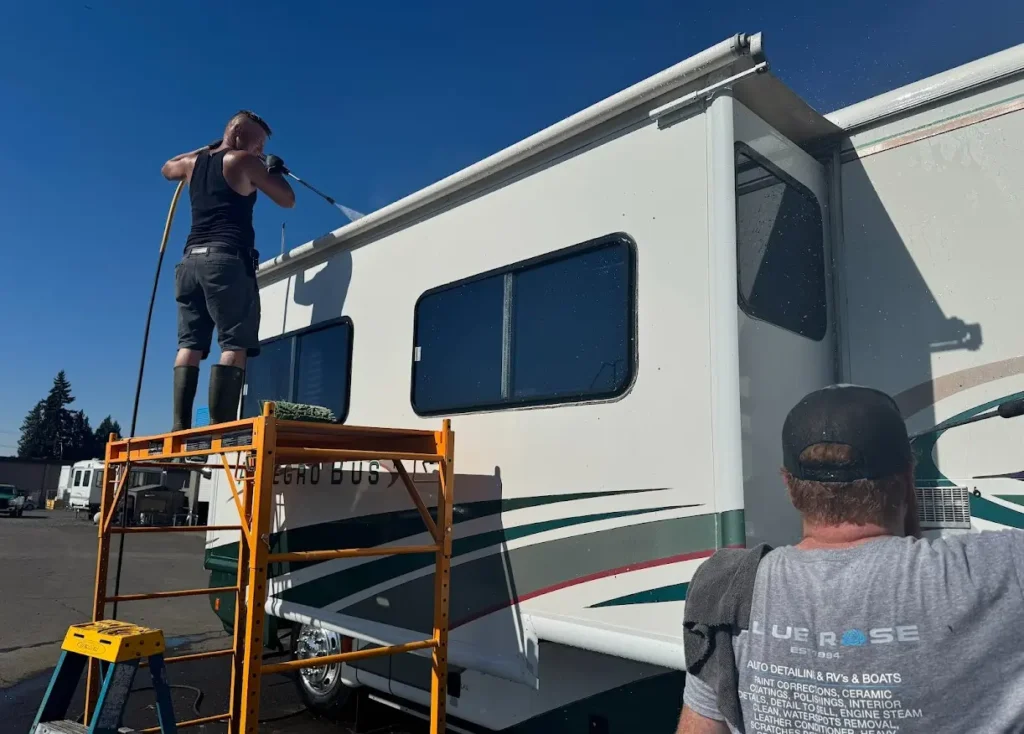
RV Roof Paint and the Most Common Roof Materials
Most RVs use rubber-based roofing materials like EPDM or TPO. These materials hold up well, though they still age.
Metal roofs exist, too, though rubber roofs show up far more often locally. Each surface needs the correct coating to bond properly.
Using the wrong product leads to peeling, bubbling, and early failure. That’s where professional guidance matters.
Rubber Roof Paint for RV Applications Explained Simply
Rubber roof paint for RV use works differently from house paint. It forms a waterproof membrane that seals the surface instead of soaking in.
This type of coating resists UV rays, ponding water, and temperature changes. Once cured, it stays flexible.
At the shop, this coating is recommended when the rubber roof still has structure left yet shows surface wear, light cracking, or chalking.
RV Rubber Roof Paint and When It Makes Sense
RV rubber roof paint works best when the roof shows early signs of wear but no major structural damage.
Here’s when coating often makes sense:
- The roof shows surface cracking or fading
These signs mean the protective layer has thinned. A coating restores protection before more serious damage begins. - Minor leaks appear around seams or vents
Coating helps seal these areas and prevents moisture from spreading further. - The roof feels soft in spots but still holds shape
This can indicate moisture exposure that hasn’t reached deeper layers yet.
Once rot or sagging appears, coating alone won’t fix the problem.
RV Roof Paint vs Full Roof Replacement
RV roof paint often costs far less than replacing the entire roof. That said, paint won’t fix structural damage.
Roof replacement removes damaged layers and installs new materials. Coating preserves what’s still solid.
A proper inspection determines which path works best. Guessing usually leads to repeat repairs.
RV Roof Paint and Local Oregon Weather
Western Oregon weather hits RV roofs hard. Rain sticks around. Moss and debris collect. Trees drip moisture long after storms end.
That constant dampness breaks down unprotected rubber faster. RV roof paint adds a moisture barrier that slows this process.
RVs stored outdoors around Eugene and Springfield benefit the most from protective coatings.
RV Rubber Roof Paint Cost in Oregon
RV rubber roof paint cost depends on roof size, prep work, and coating type.
In Oregon, rough professional estimates often fall into these ranges:
- Smaller RVs: $800 to $1,400
- Mid-size RVs: $1,400 to $2,500
- Large motorhomes: $2,500 to $4,000
These figures include cleaning, prep, seam sealing, and coating labor. Heavily damaged roofs increase cost.
This pricing often comes in well below full roof replacement.
Why Preparation Matters Before RV Roof Paint
Roof prep matters just as much as the coating itself. Skipping steps shortens lifespan fast.
Proper prep includes:
- Deep cleaning the roof surface
Dirt, chalking, and residue prevent bonding. Cleaning removes those barriers. - Repairing seams and penetrations
Vents, skylights, and edges need sealing before coating begins. - Drying the surface completely
Trapped moisture causes bubbles and adhesion problems.
At Blue Rose Auto Repair, prep work receives the same attention as the coating.
How Long RV Roof Paint Lasts
Most quality coatings last five to ten years when applied correctly and maintained.
Storage conditions matter. Covered storage extends lifespan. Regular inspections help catch damage early.
Recoating before failure costs far less than repairing water damage later.
RV Roof Paint Maintenance Tips That Actually Help
Simple habits keep coatings working longer.
- Wash the roof regularly
Removing debris prevents water pooling and mold growth. - Check seams twice a year
Early cracks show up here first. - Address small issues quickly
Small fixes prevent big repairs.
Maintenance keeps the coating working as intended.
Why Professional Application Beats DIY Kits
DIY roof kits exist, though mistakes happen often. Improper prep, uneven thickness, or wrong product choice leads to early failure.
Professional application ensures correct bonding, coverage, and cure time.
The shop sees many DIY attempts that cost more to fix later than doing it right the first time.
Why Blue Rose Auto Repair Handles RV Roof Coatings
Blue Rose Auto Repair works with RV owners across Eugene, Springfield, Cottage Grove, Junction City, and Veneta. The shop understands how local weather affects RV roofs.
Each roof gets inspected, explained clearly, and serviced based on condition rather than guesswork.
That approach keeps RVs protected for the long haul.
Frequently Asked Questions
What type of RV roof works best with roof paint?
Rubber roofs such as EPDM and TPO work best with roof coatings. These materials bond well with the paint and allow it to flex with movement and temperature changes.
Can RV roof paint stop existing leaks?
It can seal small leaks and hairline cracks. Larger leaks or structural damage need repairs first before any coating is applied.
Does roof paint change interior temperature?
Yes. Reflective roof coatings help reduce heat buildup inside the RV, which can make the interior more comfortable during warmer months.
How long does application take?
Most RV roof paint jobs take one to three days. The timeline depends on roof size, prep work, and drying time.
Can coating be applied over old paint?
Yes, as long as the old surface gets cleaned and prepped correctly. Proper prep helps the new coating bond and last longer.
Does roof paint add weight?
The added weight stays very minimal and well within safe limits for RV roofs.
Can coatings peel over time?
Yes, poor surface prep can cause peeling. Correct cleaning and application help prevent that problem.
Is roof paint safe for older RVs?
Yes, as long as the roof structure remains solid and free of rot or sagging.
Does coating affect resale value?
A sealed, well-maintained roof often improves buyer confidence and helps resale appeal.
How often should the roof get inspected?
Once or twice a year works well for most RVs, especially before and after heavy travel seasons.
Ready To Take Action?
If your RV roof shows wear, stains, or early leaks, Blue Rose Auto Repair is ready to help. Call (541) 641-8877 to speak with a knowledgeable technician or Contact Us to schedule an RV roof inspection. Serving Eugene, Springfield, Cottage Grove, Junction City, Veneta, and nearby Oregon communities, the shop focuses on clear answers, proper prep, and roof coatings that hold up.
See Also:
- Car Wrap vs Paint: A Clear Breakdown for Oregon Vehicle Owners
- How to Know If Your Car Starter Is Bad: A Straightforward Guide for Oregon Drivers
- Brake Pad Replacement Cost for Eugene, Springfield, and Nearby Cities
- How Long Do Brake Pads Last for Eugene and Springfield Drivers
- Spark Plug Replacement Cost Explained for Eugene and Springfield Drivers
0 Comments