
Questions about CVT transmission pros and cons come up often during vehicle inspections, test drives, or repair estimates. Many drivers notice a different feel while accelerating and wonder if something feels wrong. Others hear mixed opinions online and want straight answers.
Around Eugene, Springfield, Cottage Grove, Junction City, and Veneta, CVT-equipped vehicles see a mix of city traffic, hills, rain, and short trips. That driving pattern plays a big role in how these transmissions perform and how long they last. Explaining how CVTs work and what to expect helps drivers make better maintenance and repair decisions.
At Blue Rose Auto Repair, CVT conversations stay practical. The goal stays simple. Explain what’s happening, what’s normal, and what needs attention before small issues grow.
What Is a CVT Transmission and How It Works
Before breaking down CVT transmission pros and cons, it helps to explain what a CVT is.
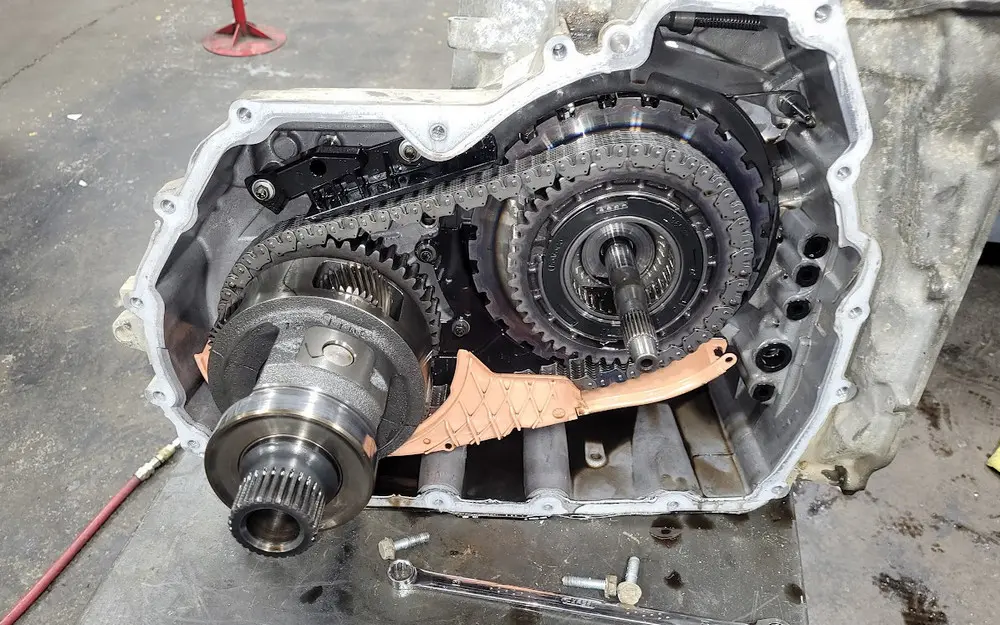
What is a CVT transmission? A continuously variable transmission does not use fixed gears like a traditional automatic. Instead, it uses a belt or chain running between two adjustable pulleys. As speed changes, the pulleys adjust smoothly, which keeps the engine operating in an efficient range.
This design allows seamless acceleration without noticeable gear shifts. Many drivers describe the feeling as smooth or quiet, especially during city driving.
CVT Transmission Pros and Cons in Everyday Driving
Driving conditions across Lane County highlight both strengths and weaknesses of CVT systems.
Smooth operation works well in stop-and-go traffic. Fuel efficiency improves during steady cruising. At the same time, hills, heavy loads, and aggressive acceleration expose limits in some designs.
That’s why understanding CVT transmission pros and cons matters before judging performance or planning maintenance.
Advantages of CVT Transmission for Local Roads
Drivers often ask what benefits CVTs bring to daily use. The advantages of CVT transmission show up most during normal commuting.
- Smoother acceleration
Without fixed gear changes, acceleration feels steady. This helps during traffic merges around Eugene and Springfield. Many drivers notice less jerking compared to older automatic designs. - Improved fuel economy
CVTs keep engines running efficiently. That often leads to better mileage during city and highway driving. Over time, fuel savings add up for commuters. - Simpler mechanical layout
Fewer gears mean fewer moving parts. That can reduce some wear areas when maintenance stays consistent. - Quiet operation
CVTs tend to operate quietly. For drivers who prefer a calm driving experience, this becomes a noticeable benefit.
Cons of Automatic Transmissions Compared to CVTs
While CVTs offer advantages, drivers still ask about limitations. The cons of automatic transmissions compared to CVTs include heavier weight and less efficient gear changes in older designs. At the same time, CVTs introduce their own challenges, especially under high stress.
Understanding differences helps drivers set realistic expectations.
CVT Transmission Problems Seen in Local Shops
Over time, certain issues appear more often. CVT transmission problems vary by manufacturer and maintenance history, yet some patterns stay consistent.
Common problems include belt or chain wear, pulley surface damage, overheating, fluid breakdown, and delayed acceleration response. In some cases, warning lights appear. In others, drivers notice slipping or unusual sounds.
These problems do not appear overnight. They develop slowly, which is why early inspections matter.
CVT Transmission Issues and Warning Signs
Recognizing cvt transmission issues early helps reduce repair costs.
Shuddering during acceleration often signals belt wear. A delayed response after pressing the gas pedal points to fluid or pressure problems. Whining noises suggest pulley surface wear. Overheating warnings usually appear during long drives or heavy traffic.
Ignoring these signs often leads to a larger transmission repair later.
Are CVT Transmissions Bad or Just Different?
Drivers often ask directly, are CVT transmissions bad?
The answer depends on expectations and care. CVTs perform well when maintained and driven within design limits. Problems arise when fluid changes are skipped or when vehicles are pushed beyond intended use, such as towing heavy loads.
CVTs work best for commuting, not aggressive driving.
Are CVT Transmissions Reliable with Proper Care?
Another common question is, are CVT transmissions reliable?
Reliability improves significantly with routine service. Regular fluid changes, cooling system health, and early inspections extend lifespan. Vehicles driven gently and serviced on schedule often see long CVT life.
Skipping service shortens that lifespan quickly.
CVT Transmission Repair and Maintenance Planning
CVT transmission repair depends on problem severity. Minor issues may involve fluid service or sensor replacement. Larger problems involve internal components and require careful diagnosis.
Early repairs cost less than full replacements. That’s why routine inspections matter during regular service visits.
Supporting Services That Affect Transmission Health
Transmission performance depends on more than internal parts. Electrical systems support sensors and control modules, which makes battery replacement and charging relevant during drivability checks. After accidents, drivetrain alignment issues sometimes follow, which explains why collision repair inspections matter.
Clean engine bays and undercarriages help spot leaks early, making auto detailing more useful than many drivers expect. Comfort upgrades like car window tinting reduce cabin heat, which indirectly helps electronic components. Fleet vehicles with branding often coordinate maintenance with commercial wraps to reduce downtime.
Local Experience Matters for CVT Vehicles
Driving patterns differ across Lane County. Vehicles serviced by an Auto Mechanic in Eugene, Oregon often face traffic congestion. Cars maintained by an Auto Mechanic in Springfield, Oregon split time between city and highway.
Rural driving near an Auto Mechanic In Cottage Grove, Oregon or an Auto Mechanic in Junction City, Oregon adds hills and longer trips, which affect heat buildup. Local knowledge helps tailor maintenance schedules.
Frequently Asked Questions About CVT Transmission Pros and Cons
Do CVTs last as long as regular automatics?
They can, with regular service and gentle driving habits.
Do CVTs feel different while accelerating?
Yes. Acceleration feels smooth without gear shifts.
Are CVTs expensive to repair?
Costs depend on damage level. Early service costs less.
Can CVTs handle hills in Oregon?
Yes, though frequent hard acceleration adds stress.
Do CVTs need special fluid?
Yes. Using the correct fluid matters.
Are CVTs good for city driving?
Yes. Stop-and-go traffic suits CVT design.
Do CVTs overheat easily?
They can if cooling systems fail or loads exceed limits.
Is towing safe with a CVT?
Light towing may work. Heavy towing shortens lifespan.
Do CVTs need more maintenance?
They need consistent maintenance, not more frequent.
Should warning signs be ignored?
No. Early inspection prevents larger repairs.
Schedule CVT Service at Blue Rose Auto Repair
Understanding cvt transmission pros and cons helps drivers avoid surprises and plan maintenance wisely. CVTs perform well when serviced correctly and driven with care.
Blue Rose Auto Repair inspects CVTs at our Springfield shop and tells you what we actually find.
Call (541) 641-8877 or schedule service through the Contact Page.
Clear answers and timely service keep CVT vehicles running smoothly on Oregon roads.
See Also:
- How to Choose Aftermarket Wheels for Eugene and Springfield Drivers
- Pros and Cons of Automatic Transmissions Explained by a Local Auto Shop
- 10 Essential Automobile Components That Can Be Replaced Before Problems Grow
- RV Roof Paint: What Oregon RV Owners Need to Know Before Coating Their Roof
- Car Wrap vs Paint: A Clear Breakdown for Oregon Vehicle Owners

0 Comments