
Boat bottom paint becomes important the moment a boat spends time in the water. Around Eugene, Springfield, and nearby places like Cottage Grove, Junction City, and Veneta, freshwater conditions create steady wear on hulls. Algae growth, mineral buildup, and constant moisture all work against the bottom of the boat.
From the shop’s side, the hull below the waterline takes more abuse than most owners realize. Water never gives that surface a break. Without protection, corrosion, staining, and drag show up faster than expected. Boat bottom paint acts as a barrier between the hull and the water, slowing damage and making the boat easier to maintain.
What Boat Bottom Paint Does Under the Waterline
Boat bottom paint protects the hull where water stays in contact the longest. The coating resists algae, slime, and mineral buildup that cling to untreated surfaces.
That buildup doesn’t just look bad. It adds drag, reduces efficiency, and strains engines. Over time, it also damages hull materials. A proper coating keeps the surface smoother and easier to clean.
In freshwater environments common across western Oregon, bottom paint plays a major role in hull longevity.
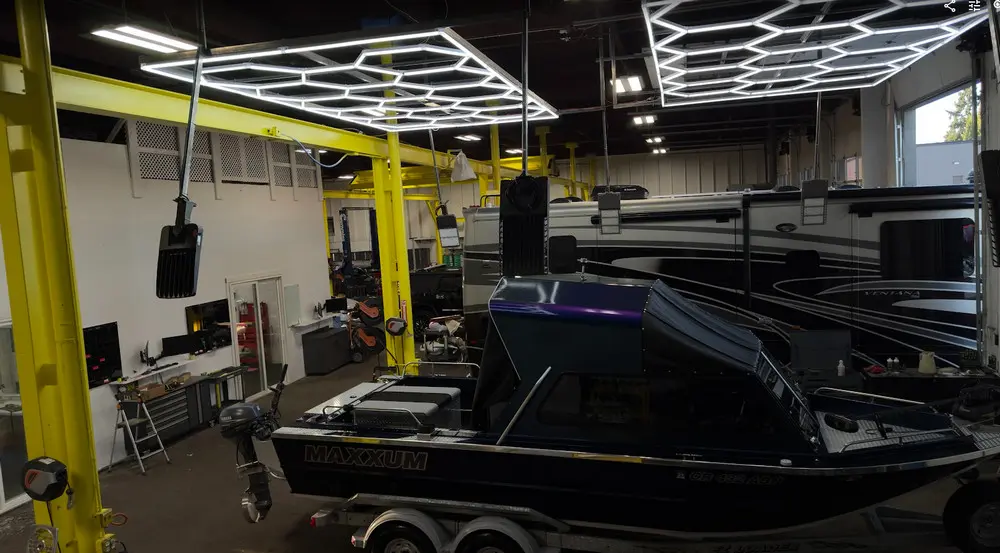
Boat Bottom Paint and Common Hull Materials
Most boats in this area use aluminum or fiberglass hulls. Each material needs the correct coating.
Aluminum requires paint that prevents corrosion without reacting to the metal. Fiberglass focuses more on growth resistance and surface sealing.
Using the wrong product leads to peeling, blistering, or surface damage. Matching the coating to the hull material keeps problems from starting.
Aluminum Boat Paint and Bottom Protection
Aluminum boat paint must be chosen carefully. Aluminum reacts with certain coatings, which speeds up corrosion instead of stopping it.
Bottom coatings designed for aluminum create a protective layer that separates the metal from water and oxygen. This helps protect seams, welds, and rivets.
At the shop, aluminum hulls always get inspected closely before coating work begins. Proper prep makes the difference between protection and problems.
Boat Bottom Paint and Freshwater Use in Oregon
Freshwater boating brings its own challenges. Lakes and rivers around Eugene and Springfield promote algae and moss growth. Boats left in the water between uses face constant exposure.
Boat bottom paint limits that growth and makes routine cleaning easier. That saves time during the season and helps protect the hull underneath.
Even boats used seasonally benefit from a proper bottom coating.
Boat Bottom Paint Prep Sets the Outcome
Prep work decides how long the paint lasts. Skipping steps shortens lifespan quickly.
Proper prep includes:
- Thorough cleaning of the hull
Growth, residue, and grime block adhesion. A clean surface allows paint to bond properly. - Removing failing paint layers
Flaking or loose paint must come off before recoating begins. - Surface scuffing and inspection
Light abrasion improves adhesion and exposes damage that needs repair first.
Each step helps prevent early peeling or failure.
Boat Painting Below the Waterline vs Above It
Painting above the waterline focuses on appearance and UV protection. Boat painting below the waterline focuses on resisting moisture, growth, and wear.
Regular marine paint doesn’t survive constant water exposure. That’s why boat paint for bottom areas uses different formulas.
This difference explains why bottom painting costs more and takes more prep time.
Boat Paint for Bottom Areas and How It Works
Boat paint for bottom use contains additives that discourage algae and growth. These additives release slowly over time, keeping surfaces cleaner.
Freshwater coatings differ from saltwater coatings. Using the correct formula matters, even inland.
Proper thickness and even coverage help the coating perform as intended.
Boat Bottom Paint and On-Water Performance
A clean, protected hull moves through water more easily. Drag drops. Handling improves. Fuel use stays more predictable.
Growth buildup slows boats down and puts extra strain on engines. Bottom paint helps maintain consistent performance between cleanings.
For fishing boats and recreational craft alike, this makes a noticeable difference.
Boat Painting Costs in Oregon
Boat painting costs vary based on hull size, condition, and prep work. In Oregon, rough estimates for bottom painting often look like this:
- Small aluminum boats: $600 to $1,200
These boats usually need less labor and material. - Mid-size fishing or recreational boats: $1,200 to $2,500
Prep work, surface condition, and paint choice affect pricing. - Larger boats and cruisers: $2,500 to $4,500 or more
Size, access, and coating type drive costs higher.
These figures usually include cleaning, prep, materials, and labor. Hull damage or heavy buildup increases cost.
Boat Bottom Paint Maintenance Tips
Regular care extends coating life.
- Inspect the hull yearly
Look for worn spots or peeling before damage spreads. - Clean gently as needed
Removing buildup early keeps the surface smooth. - Address small issues quickly
Touch-ups prevent full repaints later.
Simple maintenance saves money over time.
Why Professional Application Helps
DIY bottom painting often leads to early failure due to poor prep or incorrect products. Fixing those mistakes costs more later.
Professional application brings experience with hull materials, local water conditions, and proper coatings.
At Blue Rose Auto Repair, the process stays clear and straightforward from inspection through completion.
Frequently Asked Questions
How often should boat bottom paint be reapplied?
Most freshwater boats need repainting every one to three years, depending on use and storage.
Can bottom paint be applied over old paint?
Yes, once failing areas are removed and the surface is prepped correctly.
Does bottom paint slow a boat down?
No. A smooth-coated hull often performs better than one with heavy buildup.
Is bottom paint needed for trailered boats?
Less often, though boats that stay wet for long periods still benefit.
Can aluminum boats use the same bottom paint as fiberglass?
No. Aluminum requires coatings designed specifically for metal hulls.
Does bottom paint help prevent corrosion?
Yes, when applied correctly with proper prep.
Can hull damage be painted over?
Repairs should be completed first so the paint bonds properly.
Does bottom paint affect resale value?
A well-maintained hull often improves buyer confidence.
How long does the painting process take?
Most jobs take several days, depending on prep and drying time.
Does freshwater require a different paint than saltwater?
Yes. Freshwater formulas match inland algae and mineral conditions.
Need Help with Your Boat?
If your boat spends time in the water and the hull needs protection, Blue Rose Auto Repair is ready to help. Call (541) 344-0115 to speak with a technician about boat bottom paint options, or Contact Us to schedule an inspection. Serving Eugene, Springfield, Cottage Grove, Junction City, Veneta, and nearby Oregon communities, the shop focuses on proper prep, correct coatings, and results that last season after season.
See Also:
- Clutch Replacement Cost and What Affects the Final Price
- RV Roof Paint: What Oregon RV Owners Need to Know Before Coating Their Roof
- Car Wrap vs Paint: A Clear Breakdown for Oregon Vehicle Owners
- How to Know If Your Car Starter Is Bad: A Straightforward Guide for Oregon Drivers
- Brake Pad Replacement Cost for Eugene, Springfield, and Nearby Cities


0 Comments