Drivers around Eugene, Springfield, Cottage Grove, Junction City, Veneta, and nearby areas face all kinds of road situations. Parking bumps, road debris, weather wear, and traffic incidents can all leave marks on a vehicle. That’s where auto body and collision repair come into play. Restoring a car’s shape, paint, and fit helps the vehicle feel steady again. The goal is to bring the vehicle back to looking and driving right, without confusion or guesswork in the repair process.
This explanation is written the same way work is explained in person at the shop: clear, steady, direct, and grounded in real repair steps.
Why Auto Body and Collision Repair Matters
Damage to body panels, bumpers, doors, or the hood is more than a visual issue. It can affect how the car drives, how it handles, and even how safe it feels. A dent may push a panel inward just enough to make a door catch. A bumper that looks just slightly out of place might have pushed brackets behind it. Fixing the visible part is only one piece. The car needs to be checked for the alignment of the parts around it, too.
Once paint gets damaged and bare metal is exposed, moisture enters. In Oregon’s climate, that means rust can start. Checking and repairing paint early helps prevent spreading rust later. Clear steps early help avoid larger repairs later.
What Happens During Auto Body and Collision Repair
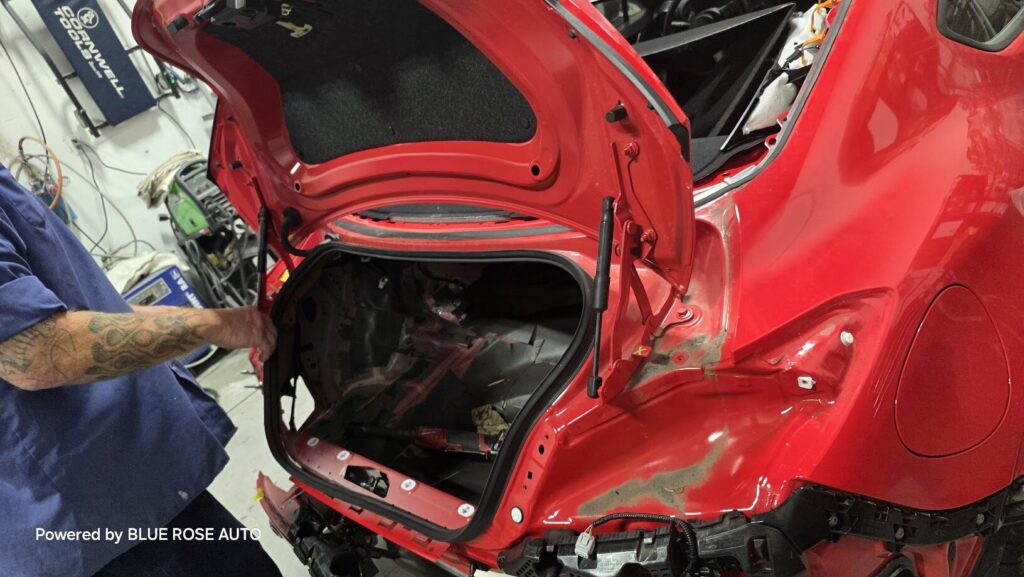
The first step is always an inspection. Visible damage doesn’t always show the whole story. Panels, brackets, lights, and inner supports connect behind the surface. Once the parts around the damaged area are checked, the plan begins.
- Initial inspection and estimate.
This step sets the repair path. The vehicle gets looked over panel by panel. Any bent supports, stretched metal, or damaged clips are noted. This avoids surprises mid-repair and lets the driver understand what the repair will cover. - Repairing or replacing damaged parts.
Some body panels can be reshaped. Others get replaced if reshaping wouldn’t hold up well. The goal is for panels to line up cleanly so the vehicle looks and functions the same way it did before the damage. - Checking alignment of the structure.
Even low-speed impacts can nudge alignment. If the car pulls while driving or if the steering wheel sits crooked, the structure may need to be reset. A steady car feels safe on the road. - Paint preparation and finishing.
Paint matches the original color and texture. Sanding, priming, and blending help the repaired spot look like it was never damaged. Paint protects the metal underneath, so this step matters for long-term condition.
Each repair step supports the one after it. The work moves on in a clear order to bring the vehicle back to daily use.
Auto Body and Collision Repair in Eugene and Springfield
Roads in this area see rain, fallen branches, narrow parking rows, and traffic movement that changes quickly. That mix means dents, scrapes, and bumper cracks happen more often than many expect. Auto body and collision repair helps restore the vehicle’s condition after these everyday bumps and hits.
Common situations include:
- Backing into a pole or cart rack while parking.
- Hitting road debris during storms or windy days.
- A fender bump during slow traffic near schools or lots.
- Damage from wildlife crossings, especially near Cottage Grove and rural edges.
These situations can be fixed. The key is steady repair steps, clear communication, and restoring the car to a shape that feels right.
Clear Communication During the Repair Process
The repair explanation matters just as much as the tools. Drivers want to know what’s happening to their car, why it needs a specific repair, and what each part affects.
The repair plan gets broken into simple parts:
The goal is to give clear choices:
- What needs attention right now. This applies to damage affecting structure, water sealing, door fit, or safety. Addressing these repairs early keeps the vehicle secure and road-ready.
- What can wait a bit. These items connect to looks or light fit issues that don’t affect driving. They can be scheduled based on budget or timing.
- What supports future reliability. These repairs stop damage from spreading, such as sealing chipped paint to slow rust growth.
This step-by-step approach keeps drivers in control of the repair plan.
Cost Factors in Auto Body and Collision Repair
Repair costs vary between cars, mostly based on the parts affected and the condition of the surrounding structure.
- Extent of visible and hidden damage.
Small dents often cost less than large panel damage. Damage that spreads to inner supports takes more time to restore. - Type of parts needed.
Some vehicles use common, easy-to-get panels. Others may need parts ordered. Replacement panels, brackets, or clips change the timeline. - Paint matching needs.
Some paint colors match quickly. Others blend best when faded slightly across nearby panels so the repaired area looks natural.
We explain these items clearly during the estimate so there are no unknowns.
Mobile Collision Work Questions
Some drivers ask about mobile collision repair Eugene services. Light buffing or touch-ups can sometimes be handled outside the shop. Full auto body and collision repair requires equipment such as paint booths, metal shaping tools, and structural measuring systems. For that reason, nearly all full repairs happen inside the shop to ensure the vehicle is restored properly.
Auto Body Repair for Springfield Drivers
Drivers searching for auto body repair Springfield Oregon often need help with door dents, bumper cracks, weather damage, or paint repairs. These repairs follow the same process: inspect, plan, repair, align, and refinish. The result aims to restore normal driving and appearance without confusion.
Other Services That Support Repair
Some repair situations connect to electrical, interior, or mechanical needs. We handle related repair work so the job is complete from start to finish.
- Battery replacement and charging for vehicles affected by impact near the front end.
- Collision repair for full accident restoration.
- Commercial wraps to restore fleet vehicles after repairs.
- Auto detailing to clean and refresh interior and exterior surfaces after repairs.
- Car window tinting for comfort, glare control, and vehicle appearance.
We also serve nearby communities:
- Auto Protection & Repair Services in Eugene, Oregon
- Auto Protection & Repair Services in Hayden Bridge, Oregon
- Auto Protection & Repair Services in Thurston Springfield, Oregon
- Auto Protection & Repair Services in Goshen, Oregon
Frequently Asked Questions
How long does repair take?
Time depends on parts, paint steps, and repair size.
Will the repaired area match the rest of the car?
Yes, the paint gets matched and blended where needed.
Can dents be repaired without replacing panels?
Some dents can be shaped back. The inspection shows which option fits.
Is frame work always needed after a collision?
No. Only if alignment or structure shifted.
Can I drive with body damage?
Only if the damage doesn’t affect doors, steering, or safety.
Do you work with insurance?
Yes. We help with the claim steps.
Do you handle body repairs on older vehicles?
Yes. We repair many model years.
Can scratches rust over time?
Yes. Moisture can create rust under chipped paint.
Do you repair bumpers?
Yes. Bumpers are one of the most common repairs.
Can I schedule repairs in stages?
Yes. We can plan repair timing around budget and schedule.
Schedule Auto Body and Collision Repair
If the vehicle has body damage or collision damage, we can inspect it and explain the repair plan step-by-step. Call (541) 344-0115 or send a message online.
We’re ready to help your car look right, feel steady, and get back on the road.


